Every homeowner eventually faces the same question when a drain repeatedly acts up: Is it time for another clearing, or do I need a more permanent solution? The answer depends less on the severity of the current clog and more on how many times you’ve already paid to address the same issue.
When Clearing Is More than Enough
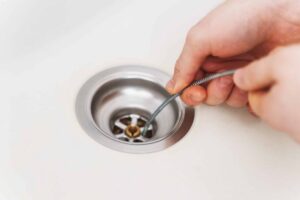
If a drain has never given you trouble before, clearing is almost always the right call. A snake or auger will remove the immediate blockage, restoring water flow. For a first-time clog in a single fixture, this is typically all that’s needed. There’s no reason to pay for a full cleaning on a drain that hasn’t shown a pattern of problems.
When It’s Time for the Full Drain Cleaning
The moment the same drain clogs a second time, the situation changes. A repeat clog in the same location indicates that the initial clearing only created a path through the blockage, rather than removing its underlying cause. The pipe walls are likely still coated with the material that formed the clog, allowing it to reform.
At this point, another clearing would only treat the symptom again, not the root cause. Snaking a drain typically costs between $100 and $400 nationally, while a full drain cleaning, such as hydro jetting, is often several hundred dollars more.
However, a drain snaked twice in a year has already cost as much as one full cleaning, and the clog is still likely to return a third time. Beyond that, repeated clearing becomes the more expensive option, not the cheaper one.
Why Pipe Age Changes the Answer
Homes with original cast iron drain lines, common in older Connecticut neighborhoods, including many around Plainville, tend to reach the repeat-clog threshold faster than homes with modern PVC. Corrosion inside cast iron creates a rougher interior surface where grease and scale can accumulate more easily, leading to quicker buildup than in newer lines.
If your home was built before 1975, we generally recommend treating a second clog as the trigger point for a full cleaning, rather than waiting for a third. This isn’t necessarily because the pipe is failing, but because the material accelerates the buildup problem compared to newer homes.
What Preventive Cleaning Looks Like on a Schedule
For most homes, a preventive cleaning every one to two years can keep buildup from ever reaching the point of causing a clog. Homes with heavier use, larger households, kitchens that frequently use a garbage disposal, or older cast iron and clay lines tend to benefit from annual cleanings.
This is a maintenance decision, not an emergency. It’s the difference between scheduling a cleaning on your terms and having one forced on you by a backup on a Saturday night.
Let Us Help You Decide
If you’re unsure whether your drain needs a clearing or a full cleaning, a quick conversation with one of our technicians can provide clarity. We’ve been advising Plainville-area homeowners on clearing-versus-cleaning calls for over 20 years. Our licensed team will honestly assess whether a drain needs a quick clear or a comprehensive cleaning, without defaulting to the more expensive option. If a drain has acted up more than once, schedule a service visit, and we’ll take it from there.